How to Build a Sustainable Fashion Career Around Garment Care and Repair
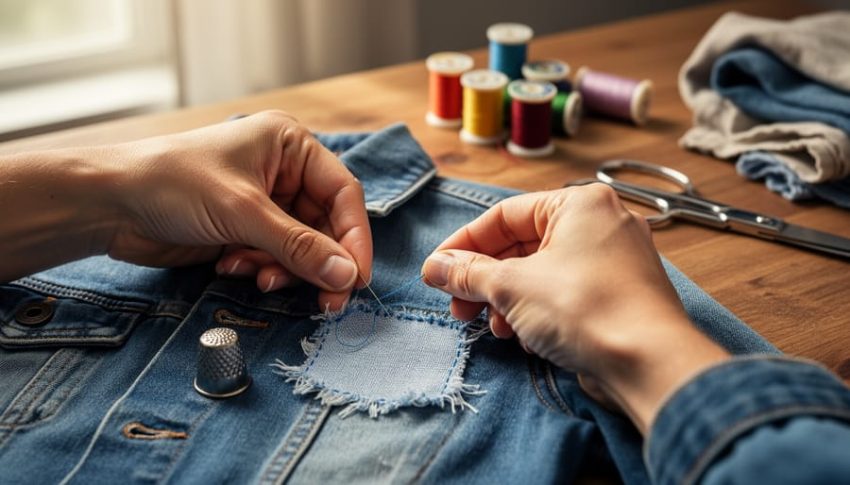
You can build a sustainable fashion career by starting with the skill that keeps clothes in use longer: garment care and repair. Learn to mend, clean, and maintain clothing well, practice on your own wardrobe, then offer those skills to friends, neighbors, and local shops. Expect a few months to feel confident with the basics, and no sewing background is required. A needle, thread, and a willingness to try are enough to begin.
Why start here? Because the greenest garment is the one that’s already made. Every hem you fix, stain you lift, or button you replace keeps a piece out of the landfill, and that’s a skill people will pay for. Alterations shops, repair studios, resale businesses, and wardrobe-care services all run on it.
This path is open to anyone. You don’t need a design degree, a big budget, or an interest in luxury labels. Everyday clothes, from school uniforms to favorite jeans, are where the work happens and where the need is greatest.
Below, you’ll find the simple tools to gather, how to work safely, the steps that take you from first stitch to first paying client, and easy ways to check you’re on the right track. Let’s get you started.
Why Caring for Clothes Is One of the Most Hopeful Careers in Fashion
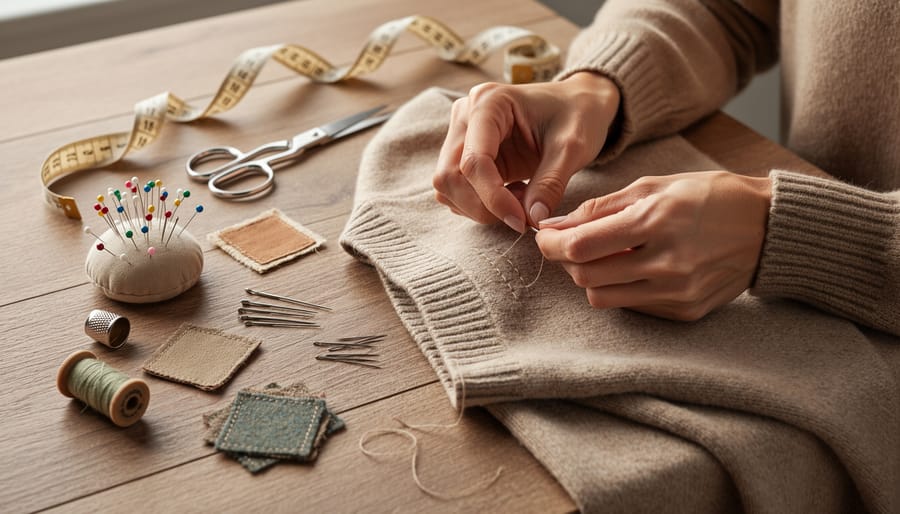
Think about the most sustainable garment in any closet. It’s rarely the newest one. It’s the one that’s still being worn. Making clothes last is the quiet heart of sustainable fashion, and it’s a lot more hopeful than it sounds, because the skills involved are learnable, affordable, and needed everywhere.
Most people own clothes they love but don’t know how to look after. A loose button, a pilled sweater, a stained collar, a hem that never quite fit: these small problems send plenty of good garments to the donation bin or the landfill. Someone who can fix, refresh, and explain proper care becomes a real asset to their community. That’s why interest in ethical fashion keeps pointing back to the same practical truth: the greenest wardrobe is one we know how to maintain.
The best part is that this path isn’t tied to luxury labels or expensive materials. Everyday denim, thrifted knits, and hand-me-down coats all deserve care, and people with every kind of budget need the help. Here are some of the roles that grow from this foundation:
- Mending and alteration specialist: You repair tears, replace zippers, and adjust fit so clothes feel new again.
- Garment care consultant: You help clients understand labels, fibers, and gentle washing routines for their own closets.
- Longevity-focused wardrobe stylist: You build outfits from what people already own and suggest smart, lasting additions.
- Laundry and textile care educator: You teach classes and share simple guides on caring for different fabrics.
- Repair workshop host: You bring neighbors together to mend side by side and swap skills.
- Resale and restoration prep: You clean, repair, and refresh pre-loved pieces so they’re ready for a second life.
Each of these roles starts with the same simple habit: paying attention to the clothes in front of you. If you can notice what a piece needs, you already have the beginning of a meaningful career.
Tools and Materials to Start Your Care and Repair Practice
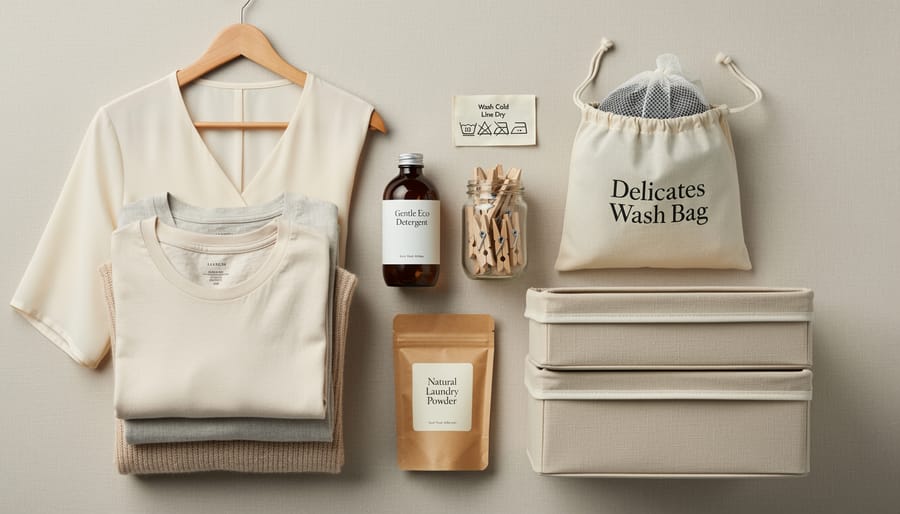
You don’t need a big budget or a studio to begin. A small, well-chosen kit will carry you through your first repairs and your first clients, and most of it can be found secondhand or made from things you already own.
- Mending: Natural-fiber needles and thread (cotton, linen, or wool) hold up well and wear kindly alongside the fabric. Check sewing kits at thrift shops or ask relatives for spare spools.
- Mending: A thimble and small, sharp scissors protect your fingers and keep cuts clean. Estate sales and swap groups often have them for pocket change.
- Mending: A darning mushroom or egg supports fabric while you close holes in knits and socks. A smooth wooden spoon or a light bulb works in a pinch.
- Mending: Patches and visible-mending scraps let you cover tears with character. Save worn-out shirts and sheets rather than buying new.
- Cleaning: A garment brush and a fabric shaver or comb refresh wool and remove pilling. Pick them up secondhand or look for simple, affordable versions.
- Cleaning: A mesh wash bag, plant-based or gentle detergent, and a stain-removal bar keep delicate pieces safe and stains manageable. Buy small sizes to test what works for you.
- Storage: A drying rack protects shape and saves energy compared with a tumble dryer. Folding racks are easy to find used or to borrow.
- Documenting: A notebook or your phone camera records before-and-after photos and notes on each piece. This is the start of your portfolio, and it costs nothing extra.
Beyond the physical kit, give yourself a few good learning resources. Library books, free video tutorials, and local mending circles are wonderful teachers, and they connect you with people who share your values. A simple practice space matters too: a table near a window with good light, a clean surface, and a small basket to keep your tools together. Start with what you have, add one item at a time as a real need appears, and let the kit grow alongside your skills.
Safety Warnings and When to Pause Before You Treat a Garment
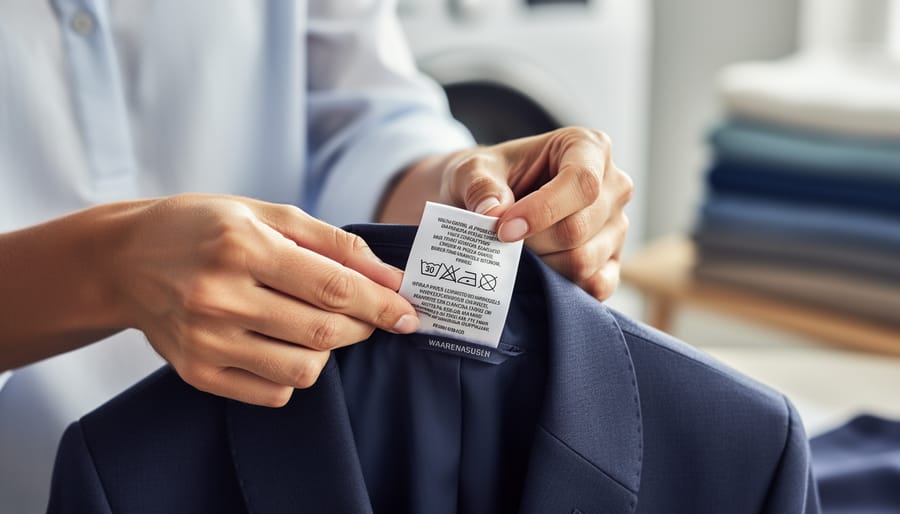
Working safely isn’t about being cautious for its own sake. It’s the habit that makes clients trust you with the clothes they love, and it protects you too.
Start every job by reading the care label, then look closely at the garment itself. Labels can be missing or wrong, so check seams, linings, and trims. Before you use any cleaner, test it on a hidden spot such as an inside hem. Wait a few minutes, then blot with a white cloth to see whether any color lifts. Choosing gentle, non-toxic products makes this easier, but a patch test is still worth doing every time. And never mix cleaning products. Even gentle ones can react badly together, so use one at a time and rinse well between steps.
A few other simple habits go a long way:
– Store needles, pins, and blades in a closed case, away from kids and pets.
– Work in a ventilated space whenever you use a treatment of any kind.
– Keep heat low and use a pressing cloth on delicate fibers like silk, wool, and fine knits.
Some pieces simply call for a specialist. Antique garments, heavily beaded or sequined pieces, structured tailoring, leather, and suede all react differently to water, heat, and handling. Referring a client onward with a kind, confident explanation shows you know your craft, and it’s often what brings them back to you next time.
Step-by-Step: Turning Care and Maintenance Skills Into a Sustainable Fashion Career
Start With Your Own Closet
Your own closet is the friendliest place to begin. There’s no client waiting, no deadline, and no pressure to get it perfect. Just you, a favorite piece of clothing, and a chance to make it last a little longer.
Pick one thing that’s been sitting in the “someday” pile: a hem that’s come loose, a sweater covered in pills, a beloved top with a stubborn stain. Fixing it is a small act, but it often sparks something bigger. That first repair that holds up through a wash tends to bring a quiet thought: I can actually do this. That confidence is where a sustainable fashion career starts to feel real.
Here’s the path those small wins can grow into:
- Learn the basics of fabric types and how to read care labels.
- Practice mending buttons, seams, hems, darning, and patching on your own clothes.
- Try gentle, low-impact laundering, stain treatment, and storage.
- Photograph before-and-after results to start building a portfolio.
- Offer your skills to friends, neighbors, and local swaps or repair cafes.
- Choose a niche and a service format, such as in-person, mail-in, workshops, or online tutorials.
- Set fair, transparent pricing that values your time and skill.
- Share your story and tips online, and partner with local sustainability communities.
- Keep learning and adding specialties as your confidence grows.
You don’t need to tackle the whole list at once. Start with step one and one garment, and let each finished repair show you what’s possible.
Build a Portfolio and Find Your First Clients
A portfolio is simply proof that your work holds up. Start with the repairs you’ve already done on your own clothes and on pieces from friends and family. Photograph each one before you touch it and again when you’re finished, in the same spot with soft daylight and a plain background. Add a close-up of the stitching so people can see the craftsmanship. A short caption noting what was wrong, what you did, and how long it took is plenty.
Next, write a simple service description for each thing you offer. Keep it plain: “Hem shortened and finished by hand, two to three days, $15.” Clear language puts first-time clients at ease, especially people who have never used a repair service before.
It also helps to choose a niche early, even a loose one. You might focus on denim, knitwear, children’s clothes, or visible mending that turns a flaw into a feature. Pick whatever you enjoy and can do well, because a clear focus makes you easier to remember and recommend.
For finding your first clients, start close to home:
– Offer repairs at clothing swaps and community markets.
– Pin a small flyer at a library, laundromat, or community center.
– Tell friends, neighbors, and coworkers what you do.
– Share your before-and-after photos online with a short note about the piece.
Word of mouth carries a lot of weight in this work, and a happy client is your best introduction.
When it comes to pricing, be transparent and fair to yourself. Add up your time, your materials, and a little for your tools wearing out. Then quote a clear price before you begin. Charging for your skill isn’t greedy; it’s what keeps this career going.
Grow Into Teaching, Consulting, or a Small Studio
Once your repairs hold up and clients keep coming back, you’ve built something worth sharing. Many care-and-repair practitioners find that teaching is the most natural next step, and it doesn’t require a big leap.
Start small. A free or low-cost mending circle at a library, community center, or swap event lets neighbors learn a stitch or two while you refine how you explain things. From there, you might offer a paid workshop on darning, gentle laundering, or stain removal. Writing simple care guides or posting short tutorials builds an audience that trusts your know-how.
Wardrobe consultations are another gentle way to grow. Sit with someone, look through what they already own, and help them decide what to mend, what to care for differently, and what to wear more often. It’s a chance to encourage the kind of everyday, sustainable habits that make a real difference without making anyone feel judged.
If demand keeps building, a small studio or a regular pop-up repair table can become your home base. Keep prices fair, welcome every budget and skill level, and let the community shape what you offer next.
How to Check Your Progress and Plan Your Next Steps

You’ll know your sustainable fashion career is on track when the small signs start adding up. Run through a few simple self-checks every month or so.
– Do your repairs survive the wash? Mend a hem or patch a knee, then launder it as you normally would. If the stitches hold and the fabric still lies flat, your technique is sound.
– Do clients come back? A returning customer, or a friend they send your way, is the clearest sign that your work earns trust.
– Can you explain care steps simply? If you can tell someone why you wash a sweater cold and dry it flat, in plain words, you’re ready to teach.
– Does your pricing cover your time and materials? Add up the hours, thread, and patches. A fair price leaves you feeling valued, not drained.
Keep your before-and-after photos and a small notebook of what worked. Looking back over them shows how far you’ve come, even when progress feels slow.
Once your checks feel steady, choose a next move that excites you. You might deepen a specialty, like visible mending or knitwear care, or join a local repair café or sewing circle to learn alongside others. Many beginners also explore short courses or community workshops to sharpen a skill. You don’t need to do everything at once. Pick one step, try it for a few weeks, and let what you learn point you to the next.
Common Questions About Starting a Sustainable Fashion Care Career
Most people who ask these questions are already closer than they think. Here are the answers beginners reach for first.
Do I need formal training to start?
No. Many people begin by learning from books, videos, community repair cafés, or an experienced neighbor, then build skill through practice. Formal classes can help you go deeper later, but they’re a choice, not a gate.
How can I start with very little money?
Begin with a small kit of needles, thread, and scissors, and practice on your own clothes and secondhand finds. Swap clothes or skills with friends, and add tools only as your work calls for them.
Do I need a sewing background?
Not at the start. Basic hand stitches, like a running stitch or a whipstitch for a loose hem, are enough for many repairs, and your confidence grows with each one you finish.
How should I price my services?
Add up your time, your materials, and a small amount for your tools wearing out, then check what similar local services charge. Pricing fairly for your skill helps your work last as a career instead of an occasional favor.
Staying sustainable in daily practice comes down to a few habits. Reuse scraps for patches, choose natural-fiber thread when you can, and wash gently so the clothes you care for keep going. It also helps to be a thoughtful guide for the people who trust you. Clients will ask which brands and claims are genuine, and learning to spot greenwashing lets you answer honestly without judgment. Looking at a few greenwashing examples can sharpen that instinct quickly. You don’t need to be perfect to begin. Small, steady care is what builds this kind of career.
Every lasting career starts with something small, and yours might be as simple as a loose button or a favorite sweater that needs a little love. That’s the quiet power of caring for clothes. You don’t need a fashion degree, a big budget, or a famous label behind you. You need curiosity, a few humble tools, and a willingness to treat what already exists as worth keeping.
Think about what you’ve learned here. Mending, gentle laundering, alterations, and sharing what you know can grow into real work, whether that means a few neighbors who trust you with their favorite jeans or a workshop that teaches a whole community. Each repair keeps a garment out of the bin and builds your skills, and it shows the people around you that clothes can have a long, good life. That is the heart of Sustainable Fashion Care and Maintenance, and it’s also the doorway to a sustainable fashion career that fits your life.
So here’s a gentle invitation. This week, pick one garment that’s been waiting for attention. Check its care label, gather your thread and needle, and fix it, or refresh it, or simply wash it with a little more care. Take a before-and-after photo. That small step is the beginning of something you can be proud of, and the fashion world needs people like you.