Why Every Eco-Conscious Student Needs a Sustainability Journal (And How to Start One)

Transform your relationship with the planet by putting pen to paper. A journal for sustainability education isn’t just a notebook—it’s your personal roadmap for living more consciously, tracking your environmental impact, and celebrating every small victory on your eco-journey.
Start by dedicating five minutes each evening to record one sustainable choice you made that day, whether you refused a plastic bag, chose a secondhand item, or prepared a plant-based meal. This simple practice builds awareness of your habits and reveals patterns you never noticed before. Document your questions too: Why do certain fabrics harm the environment? How can I make my beauty routine more eco-friendly? These queries become launching points for deeper learning.
Use your journal to set monthly challenges that align with sustainable living practices. Perhaps February focuses on reducing food waste, while March explores ethical fashion alternatives. Track your progress with honest reflections about what works and what feels overwhelming. You’ll discover that sustainability isn’t about perfection—it’s about consistent, meaningful steps forward.
Your journal becomes a powerful educational tool when you include insights from people inspiring you. Paste articles, sketch ideas from documentaries, or record conversations with community members making a difference. This collection of knowledge transforms into your personalized sustainability curriculum, tailored to your lifestyle, interests, and goals. Over time, you’ll notice how these pages reflect not just what you’ve learned, but who you’re becoming.
What Makes a Sustainability Journal Different from Regular Journaling
While traditional journaling captures thoughts, feelings, and daily events, a sustainability journal serves a more intentional purpose: it transforms your environmental awareness into measurable action. Think of it as your personal eco-education companion, a space where you document not just what you think about climate change, but how you’re actively responding to it through your daily choices.
A sustainability journal focuses on tracking tangible behaviors and their environmental impact. Instead of simply writing about a stressful day, you might record how many plastic bottles you avoided using, the secondhand clothing items you purchased instead of fast fashion, or the plant-based meals you tried this week. This shift from abstract thoughts to concrete actions creates accountability and reveals patterns you might otherwise miss.
This focused approach helps you celebrate small victories while identifying areas for growth. You might discover that you’ve successfully built eco-friendly habits around reducing food waste but still struggle with sustainable beauty product choices. That’s valuable insight that guides your next learning steps.
The documentation aspect also creates a powerful learning archive. When you record why you made certain sustainable swaps, research notes about ingredient transparency in skincare, or reflections on how living more sustainably makes you feel, you’re building a personalized sustainability education resource. You can look back and see how your understanding has deepened, how your habits have evolved, and how far you’ve come on your environmental journey. This tangible progress often provides the motivation to keep going when sustainable living feels challenging.
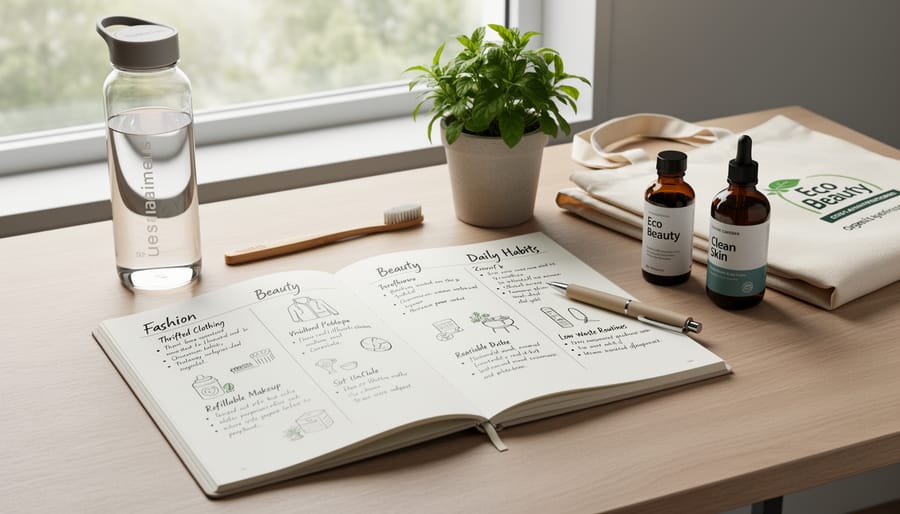
The Learning Benefits: How Journaling Deepens Your Sustainability Education
Making Connections Between Daily Choices and Global Impact
One of the most powerful aspects of keeping a sustainability journal is discovering how your everyday decisions ripple outward to create meaningful environmental change. When you document your choices around clothing, cosmetics, and daily habits, patterns emerge that reveal your true impact on the planet.
Consider Maya’s experience. She began tracking her shopping habits and realized she was buying fast fashion items every weekend, most of which she wore only once. By journaling about each purchase’s origin, materials, and longevity, she started questioning her patterns. Within three months, she shifted to making sustainable fashion choices, reducing her clothing purchases by 70% while feeling more satisfied with her wardrobe. Her journal showed her the connection between impulse buying and textile waste flooding landfills.
Similarly, journaling about beauty routines opens eyes to the journey of products from creation to disposal. Writing down ingredient lists, packaging types, and how quickly you finish products helps you recognize opportunities for positive change. You might notice that your favorite moisturizer contains microplastics that wash into waterways, or that switching to refillable containers could eliminate dozens of plastic bottles annually.
This practice transforms abstract environmental concepts into personal, tangible realities. When you see your own handwriting documenting reduced waste, energy savings, or support for ethical brands, the connection between individual action and global health becomes undeniable. Your journal becomes proof that small, intentional choices accumulate into significant positive impact.

Tracking Your Progress Without Perfectionism
Your sustainability journal isn’t about proving you’re the perfect eco-warrior. It’s a celebration of your unique journey, complete with small wins, curious questions, and yes, even those moments when you forgot your reusable bag at home again.
Think of your journal as a gentle friend rather than a strict judge. When you flip back through entries from three months ago, you’re not looking for perfection. Instead, you might notice how you’ve naturally shifted from buying fast fashion to exploring secondhand treasures, or how your bathroom now holds three plastic-free beauty swaps instead of zero.
The real magic happens when you document honest reflections without judgment. Write about what worked and what didn’t. Maybe that zero-waste shampoo bar wasn’t for you, but you discovered a refillable option you love. That’s progress worth celebrating.
Consider tracking just one or two sustainability goals at a time rather than overhauling everything overnight. Your journal becomes evidence of incremental change, showing how small, consistent actions compound into meaningful transformation. Each entry is a data point in your personal growth story, reminding you that sustainable living is a practice, not a destination. By focusing on progress over perfection, you’ll maintain motivation and avoid the burnout that comes from impossible standards.
What to Include in Your Sustainability Journal
Fashion and Wardrobe Tracking
Your fashion journal becomes a powerful tool for transforming your relationship with clothing. Start by documenting each new purchase, including the date, item description, price, and why you chose it. This simple practice creates awareness around your buying patterns and helps you pause before impulse purchases.
The cost-per-wear metric is eye-opening. Divide an item’s price by the number of times you’ve worn it, updating this calculation monthly. You’ll quickly discover that your $200 quality jacket worn fifty times costs just $4 per wear, while that trendy $30 top worn twice actually costs $15 per wear. This insight naturally guides you toward thoughtful, lasting choices.
Dedicate pages to brand ethics research, noting companies’ labor practices, environmental commitments, and transparency levels. Record what you discover and how it influences your decisions. One sustainability educator shared how her research journal revealed that three of her favorite brands had excellent repair programs, completely changing her approach to garment care.
Use your journal to celebrate style evolution. Sketch outfit combinations that work, photograph looks you love, and reflect on how your personal style develops as you embrace sustainable fashion. Notice patterns in colors and silhouettes that truly serve you, helping you build a purposeful wardrobe rather than chasing trends.
Beauty and Personal Care Observations
Your beauty and personal care journal becomes a powerful learning tool when you start documenting your journey toward more sustainable choices. Begin by recording the ingredients in your current products—you might be surprised to discover what you’ve been applying to your skin daily. Take photos of packaging or sketch simple diagrams to track how much waste each product generates. This visual record often reveals patterns you hadn’t noticed before.
As you experiment with natural beauty alternatives, note their effectiveness compared to conventional products. Does that DIY sugar scrub leave your skin feeling as smooth as store-bought versions? How does your homemade toner compare in results and cost? Document your skin and body’s responses honestly. Some people discover sensitivities to synthetic fragrances they never realized they had, while others find that simpler formulations work beautifully.
Create a simple rating system that works for you—stars, numbers, or even color coding. Track the longevity of products too. That refillable shampoo bar might seem pricier initially, but journaling helps you realize it lasts three times longer than bottled alternatives. These observations transform abstract sustainability goals into tangible, personalized data that guides your future choices and builds confidence in your eco-friendly beauty routine.
Learning Log and Resource Library
Think of your journal as your personal sustainability library, a treasure trove of knowledge you’re building one page at a time. Create dedicated sections to track the articles, documentaries, podcasts, and social media accounts that resonate with you. When you watch a documentary about textile waste, jot down three key takeaways and how they might influence your shopping habits. If you discover an expert sharing innovative zero-waste beauty tips, note their insights and experiment with their suggestions.
This practice transforms passive consumption into active learning. Instead of scrolling past inspiring content and forgetting it by tomorrow, you’re creating a reference guide tailored to your interests. One community member shared how her resource log helped her identify patterns in sustainable fashion—she noticed five different sources recommending clothing swaps, which motivated her to organize one in her neighborhood. Your collection becomes a roadmap showing how far you’ve come and where you want to explore next, making sustainability education feel personal and achievable.
Getting Started: Your First Month of Sustainability Journaling
Choosing Your Journal Format: Digital vs. Physical
Let’s be honest: choosing between a physical notebook and a digital app comes with its own sustainability puzzle. There’s something beautifully ironic about using paper to track your environmental journey, yet many of us connect more deeply when pen meets page. The good news? There’s no wrong answer here—just the format that works best for you.
- No paper waste and easily accessible across multiple devices.
- Searchable entries help you track patterns and progress quickly.
- Photos and links can be embedded directly into your entries.
- Cloud backup ensures you never lose your sustainability insights.
- Screen fatigue can make journaling feel like another task.
- Requires charging and internet access for some features.
- Less tactile and meditative than handwritten reflection.
- Digital devices have their own environmental footprint in production.
If you choose physical journaling, consider recycled paper notebooks or repurposing materials you already have. Maya, a beauty blogger, shared how her grandmother’s unused recipe book became her sustainability journal—turning something collecting dust into a cherished learning companion. Digital journalers might explore apps with offline capabilities or simple note-taking programs that don’t require constant updates. The key is selecting a format you’ll actually use consistently, because the greatest waste is a journal left untouched.
Real Stories: How Journaling Transformed Their Sustainable Living Journey
Meet Sarah, a marketing professional who felt overwhelmed by conflicting sustainability advice. She started her journal with one simple question: “Where do my clothes actually come from?” Three months later, her closet had transformed. By tracking each purchase and researching brands in her journal, she discovered she’d reduced impulse buys by 70% and shifted to quality pieces from ethical companies. “Writing it down made me accountable,” Sarah shares. “I couldn’t ignore the patterns anymore.”
Then there’s Marcus, who used his sustainability journal to tackle his skincare routine. He dedicated pages to ingredient research, documenting which products contained microplastics and harmful chemicals. His journal became a personal reference guide, complete with sketches and notes about package-free alternatives he discovered. Within six months, he’d switched to completely sustainable beauty products and even started sharing his findings with friends. “The journal made learning feel like an adventure rather than a chore,” he explains.
Community organizer Priya took a different approach, using her journal to track neighborhood waste patterns and document conversations with local business owners about sustainable practices. Her detailed observations led to launching a clothing swap program that’s now served over 200 families. “Journaling helped me see the bigger picture and identify real solutions that worked for our community,” she says.
What ties these stories together? Each person started exactly where they were, without judgment or perfection. They used their journals to ask questions, track progress, and celebrate small wins. Sarah’s first entry simply listed three clothing brands to research. Marcus started by photographing his current products. Priya began with a single block of her neighborhood.
Their transformations didn’t happen overnight, but the consistent practice of journaling turned curiosity into knowledge and knowledge into meaningful action. Your sustainability journey can follow the same path, one honest entry at a time.
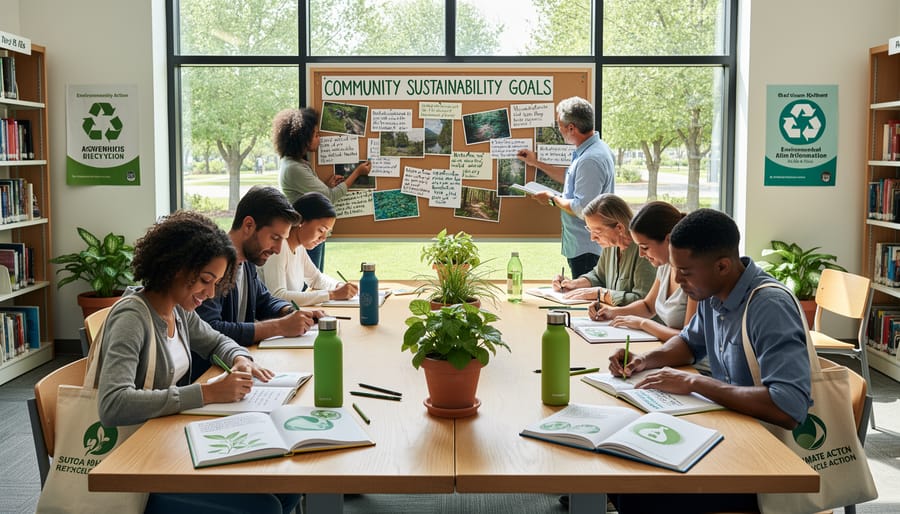
Beyond the Pages: Turning Journal Insights Into Community Action
Your journal isn’t meant to gather dust on a shelf—it’s a springboard for real change in your community. The insights you’ve been documenting about sustainable fashion choices, zero-waste beauty routines, and eco-friendly living can become powerful teaching tools for others on similar journeys.
Start small by sharing your discoveries with friends over coffee. When you’ve tracked how switching to refillable beauty products saved you money and reduced waste, that personal data becomes a compelling story that resonates more than any abstract statistic. Your journal entries transform into conversation starters that feel authentic and relatable.
Consider forming a sustainability circle with like-minded individuals in your neighborhood. These informal gatherings can use your documented experiences as discussion prompts. One member might share their journal notes about thrifting successes, while another presents research on local composting programs. These circles create accountability and multiply impact—when five people each influence five more, change ripples outward exponentially.
Your journal also positions you to contribute meaningfully to community initiatives. Local environmental groups often need volunteers who understand the practical challenges of sustainable living. Your documented journey—complete with both wins and setbacks—makes you a credible voice for workshops, social media campaigns, or neighborhood clean-up events.
Take inspiration from Maya, a beauty blogger who turned her skincare ingredient research journal into free community workshops at her local library. She now teaches dozens of people how to read product labels and make informed choices. Her personal commitment evolved into collective education, proving that one person’s dedication to learning can illuminate the path for many others seeking sustainable solutions.
Starting your sustainability journal doesn’t require perfection—it simply requires that first page. Whether you dedicate five minutes or fifty, every entry you write is a meaningful step toward understanding your environmental impact and discovering solutions that work for your life. Think of this journal as your personal sustainability companion, not a test you need to pass.
Begin wherever you are right now. Maybe you’ll start by tracking your shopping habits this week, noting one beauty product you researched, or reflecting on a conversation about sustainable fashion that sparked your curiosity. There’s no “right way” to journal for sustainability—only your way. The beauty of this practice lies in its flexibility and accessibility. You don’t need expensive materials or expert knowledge. A simple notebook and genuine curiosity are all you need to begin transforming your relationship with the planet.
Remember, sustainable living isn’t about dramatic overnight changes. It’s built through small, intentional choices that compound over time. Your journal captures this journey, celebrating progress while gently guiding you forward. Each reflection, question, and goal you write becomes part of your story—a story of someone choosing to learn, grow, and make a difference.
So pick up that pen today. Write your first entry. Your sustainability journey starts now, and it starts with you.