Kratom Kulture and Sustainable Cultivation: Who Can Grow It, How to Start, and Where to Get Help
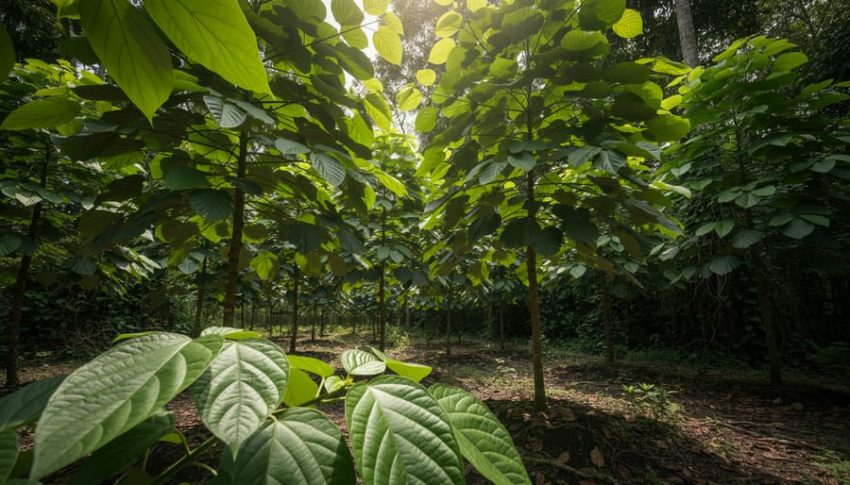
Kratom kulture is the shared tradition, craft, and community knowledge that has grown around a tropical tree native to Southeast Asia. Growing it sustainably means choosing warm, humid conditions, planting with care for the soil and surrounding forest, and checking your local laws before you put a single seed in the ground. It’s a slow, rewarding process. Expect patience measured in seasons, not weeks, and a moderate learning curve if you’re new to tropical plants.
Why does this matter? Because the plant’s story started long before it became a topic online. For generations, farming families in places like Indonesia, Thailand, and Malaysia have tended these trees alongside other crops, passing down methods for harvesting leaves without harming the tree. That inherited know-how is the heart of the culture. When growers protect it, they protect the land, the livelihoods tied to it, and the future of the tree itself.
In this article, we’ll walk through what the plant is, who can grow it, and how climate and local rules shape the answer. You’ll get a clear step-by-step growing process, a look at your rights and responsibilities, and places to turn when you need support. Along the way, you’ll hear from growers who’ve built thriving, responsible gardens, and what they’d tell anyone just starting out. No jargon, no judgment. Just practical, encouraging guidance for growing with care.
What Kratom Kulture Really Is: Roots, Rituals, and the Case for Sustainable Cultivation
From Village Traditions to a Global Conversation
For generations, the kratom tree grew quietly at the edges of village life in Thailand, Malaysia, Indonesia, and nearby regions. Farmers and laborers traditionally chewed or brewed the leaves during long days in the fields, and the tree held a familiar place in local gatherings and everyday routines. Knowledge about when to harvest, how to care for the trees, and how to use the leaves passed from one generation to the next, mostly by word of mouth.
Then the world started paying attention. As travel opened up and information spread online, interest in kratom moved far beyond the places where it was rooted. Today you can find conversations about it in communities across the globe, from natural wellness circles to online grower forums.
That growth brings an important question for anyone who cares about conscious living: where does what we buy actually come from? Rising demand can strain forests and tempt growers toward shortcuts, while thoughtful sourcing can protect both the land and the families who tend it. Understanding the story behind the leaf helps us choose in ways that honor the communities who kept this tradition alive.
What ‘Sustainable’ Looks Like on a Kratom Farm
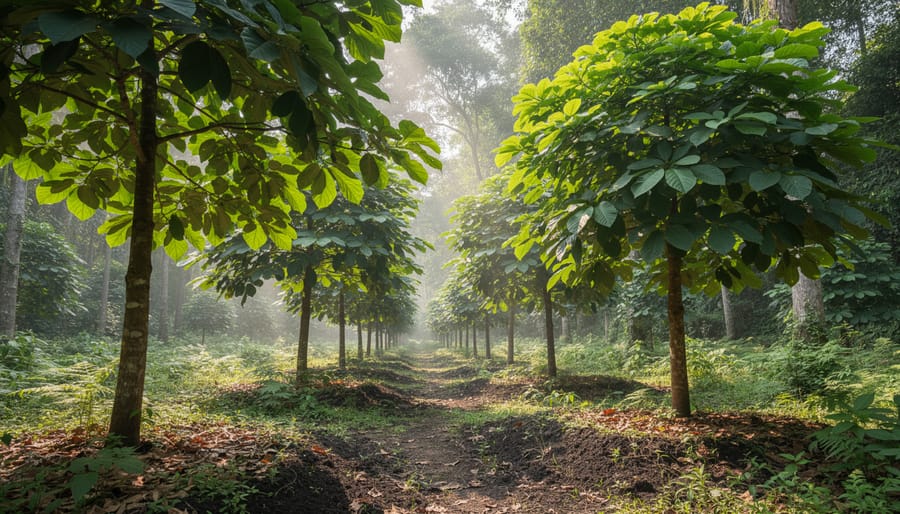
Picture a kratom farm that feels more like a small woodland than a field of rows. Tall trees give shade, the ground is covered with fallen leaves, and birds and insects move through the branches. That’s the heart of sustainable growing: working with the forest instead of clearing it away.
Here are the core practices you’ll see on a thoughtful farm:
- Selective, leaf-only harvesting, so branches stay intact and trees can regrow.
- Shade and biodiversity, keeping the forest canopy and nearby plants in place.
- Composting and mulching to feed the soil and hold in moisture naturally.
- Water-wise irrigation that gives trees what they need without waste.
- Fair pay and community involvement, so the people who tend the trees share in the benefits.
None of these ideas are complicated, and that’s the good news. Healthy soil grows stronger trees, which means less need for harsh sprays. Careful picking, taking mature leaves and leaving plenty behind, keeps a tree productive for years rather than exhausting it in a season.
The human side matters just as much. A farm is only truly sustainable when growers are treated fairly and have a voice in decisions. When you start asking where your kratom comes from, these are the practices worth looking for.
Who Can Grow Kratom Sustainably? Eligibility, Climate, and Legal Requirements
Is Your Climate and Space Ready?
Kratom trees (Mitragyna speciosa) come from tropical rainforests, so they love warmth. They do best when temperatures stay roughly between 70 and 90°F, with steady humidity, bright but filtered light, and rich, well-draining soil that holds a little moisture without getting soggy. A touch of dappled shade mimics the forest canopy they grew up under, and it also protects young leaves from scorching. Frost is the real enemy, since cold snaps can seriously stress or harm a tree.
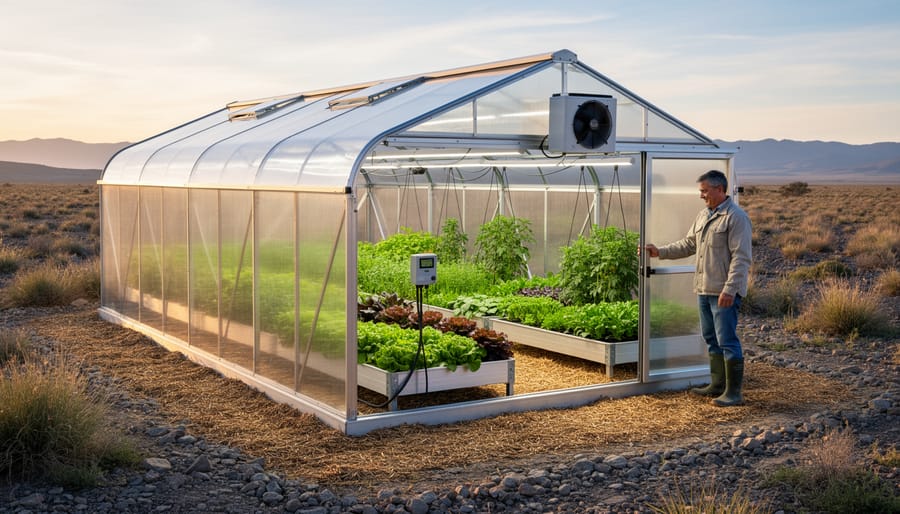
The good news is that you don’t need a jungle to grow thoughtfully. Cooler-climate gardeners can use greenhouses, sunrooms, or large containers that move indoors when the weather turns. Here’s a quick way to compare your options:
| Growing Setup | Climate Needs | Space Required | Effort Level | Sustainability Notes |
|---|---|---|---|---|
| Tropical outdoor | Warm, humid, frost-free year-round | Garden plot or small grove | Low to moderate | Supports healthy soil and natural shade trees |
| Greenhouse | Any region, with heat and humidity control | Medium to large | Moderate to high | Choose efficient heating and rainwater collection |
| Container or indoor | Bright window or grow light, moveable in cold | Small, a few pots | Moderate | Compost-rich potting mix keeps waste low |
Start with the setup that matches the space and climate you already have. A single container is a wonderful, low-pressure way to learn how these trees behave before you expand.
Checking the Rules Where You Live
Before you plant a single seedling, take a little time to learn what the rules look like where you live. It may sound like paperwork, but it’s one of the most empowering steps you can take. Knowing the rules up front protects you, your land, and your community, and it sets you up to grow with confidence rather than worry.
Kratom is treated very differently from one place to the next. Some areas allow growing and selling, others restrict one or both, and some have requirements around permits, licensing, or labeling. Because those details can shift over time, treat any single source, including this article, as a starting point rather than the final word.
So where do you find reliable answers? Start with official government websites for your national, state, or regional agriculture and health departments. Your city or county clerk’s office can tell you about local ordinances. A local agricultural extension office is another friendly, practical resource, since staff there often help new growers navigate exactly these questions. If you plan to sell, ask directly about business licenses and product rules. A short phone call or email now can save you real trouble later.
How to Start Growing Kratom Sustainably: A Step-by-Step Process from Planning to Harvest
Planning, Sourcing, and Planting
Start with the paperwork, not the shovel. Before you buy a single seedling, confirm that growing kratom is allowed where you live. Check your local and national rules, and ask your agricultural extension office if anything is unclear. Eligibility comes first because it protects both you and your future trees.
Next, choose your site. Kratom thrives in warm, humid conditions with bright, filtered light and rich, well-draining soil. A spot with morning sun and afternoon shade works well, and a container or greenhouse is a fine alternative if your winters are cool. Walk the space at different times of day and notice where water pools or wind bites.
Then find transparent suppliers. Look for nurseries and growers who happily tell you where their cuttings or seedlings came from, how they were raised, and how their workers are treated. Don’t hesitate to ask questions. A trustworthy supplier will welcome them, and healthy, ethically sourced young trees make everything that follows easier.
Finally, prepare the soil the gentle way. Mix in compost, aged leaf mold, or well-rotted manure, and top the bed with mulch to hold moisture and feed the soil life. Skip synthetic fertilizers and harsh chemicals. Dig a hole twice as wide as the root ball, set the tree at its original depth, water deeply, and give it a little shade while it settles in.
Caring for Your Trees and Harvesting with Respect
Once your young trees are settled, steady care keeps them thriving for years. Kratom loves consistent moisture, so water deeply when the top inch of soil feels dry, and skip the soggy feet that invite root rot. A layer of mulch from leaves or wood chips holds in moisture and feeds the soil as it breaks down. If you’re composting kitchen scraps for that mulch, these practical sustainability steps can help you close the loop at home.
Shade matters too. Young trees do best with filtered light, while mature ones handle more sun if they stay well watered. Companion planting under a taller canopy mimics the forest where kratom naturally grows.
For pests, start gentle. Check leaves regularly, wash off aphids with a spray of water, and welcome ladybugs and other helpful insects. A diluted neem oil or soap spray handles most stubborn problems without harsh chemicals.
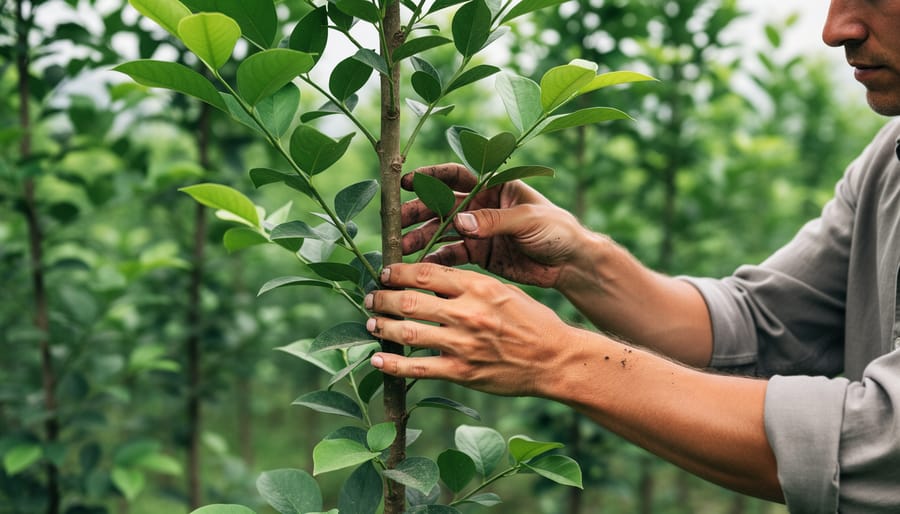
When it’s time to harvest, think of it as pruning with purpose. Pick mature leaves from different branches, and never strip a tree bare. Always leave plenty of foliage so the tree keeps photosynthesizing and growing. Use clean, sharp shears, and avoid tearing stems. Compost any damaged or unused leaves rather than tossing them, so nothing goes to waste. Patient, respectful harvesting rewards you with healthy trees season after season.
Voices from the Grove: Growers Share What Sustainability Means to Them
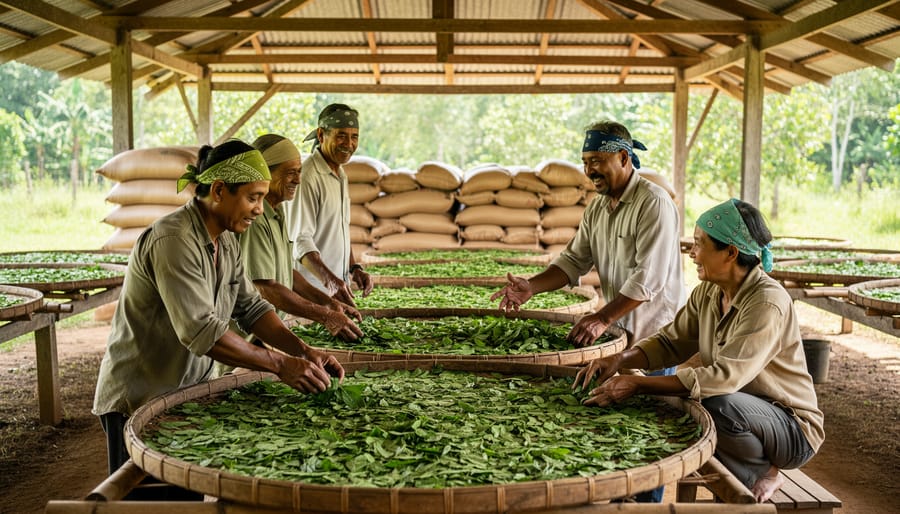
Every grower’s path into sustainable farming starts somewhere different, and that’s what makes their stories worth hearing. Below is an interview format you can bring to life with a real grower or cooperative. Treat each answer as a prompt for your source’s own words, not a script.
Question 1: What first made you rethink how you farm?
Invite your source to describe a turning point: a season of tired soil, a conversation with neighbors, or a moment of seeing the forest edge shrinking. The best answers are specific and human, like the day they chose to leave the shade trees standing.
Question 2: What changed on your land once you switched to sustainable methods?
Ask for concrete details. Did mulching and compost make the soil darker and easier to work? Did keeping a mixed canopy mean fewer pests and less watering? Encourage them to share what they saw, in the order they saw it.
Question 3: What’s one practical tip you’d give a beginner?
Growers often say the same thing in different ways: start small, observe your trees, and harvest leaves gently so the tree keeps its strength. Let your source describe the habit that made the biggest difference for them.
Question 4: How has the community benefited?
This is where cooperatives shine. Ask about shared tools, fair pricing, training days, or younger neighbors learning to care for the land. Look for the story of people lifting each other up.
Question 5: What would you want a buyer to know?
Invite them to describe what transparency looks like from the grower’s side, and what questions they’d love customers to ask.
Question 6: What are you most proud of?
End on something hopeful. A thriving grove, a steadier income, or a tradition passed along will leave readers inspired to take their own first step.
Your Rights and Responsibilities as a Conscious Grower and Buyer
Being a conscious grower or buyer comes down to two simple ideas: you deserve fairness and clear information, and you share the job of caring for people and land.
If you grow kratom, you can reasonably expect fair dealings with suppliers and buyers, access to clear information about local rules and good growing practices, and the support of a community that wants you to succeed. Agricultural extension offices and grower groups exist to share knowledge, so lean on them.
With those rights come a few responsibilities. Here’s what a thoughtful grower commits to:
- Follow every local, state, and national law that applies to growing and selling.
- Handle and store leaves safely, keeping them clean, dry, and clearly separated from other products.
- Label honestly, with no inflated claims about origin, purity, or benefits.
- Treat workers fairly with safe conditions and a fair wage.
- Protect the soil, water, and surrounding trees you depend on.
If you’re on the buying side, your questions are powerful. Sellers who care about their practices are usually happy to answer, and that openness is often the best sign you’re in good hands. Try asking:
- Where exactly was this grown, and by whom?
- What farming methods were used to protect the land?
- Has the product been independently tested, and can I see the results?
- Do the growers receive fair pay for their work?
Pay attention to the language on the label, too. Vague, feel-good wording isn’t proof of anything, so it helps to spot greenwashing before you buy. Learning common misleading eco-terms makes that easier, and our guide on how to spot it in everyday shopping carries over well. The same habits of reading ingredients and checking claims appear in our non-toxic buying guide.
You don’t need to be an expert, just curious and kind.
Where to Get Help: Resources, Communities, and Answers to Common Questions
You don’t have to figure this out alone. One of the most encouraging parts of kratom kulture is how willing growers, farmers, and sourcing advocates are to share what they’ve learned. A few good starting points can save you time and help you grow with confidence.
Begin close to home. Your local agricultural extension office is often the friendliest first stop, since staff can talk through soil, climate, and plant care in plain language. For questions about rules and permits, look to your regional or national agriculture and regulatory agencies, which usually publish official guidance on what’s allowed where you live. Because laws vary so much from place to place, trust these official sources over forum posts or hearsay.
Beyond government help, look for sustainable farming organizations and fair-trade or ethical sourcing groups. They often offer beginner guides, workshops, and directories of transparent suppliers. Reputable grower communities, whether local garden clubs or well-moderated online groups, are wonderful for swapping practical tips, though always double-check anything that touches on legality or safety against official information.
Here are answers to a few questions newcomers ask most often.
Is it legal to grow kratom where I live?
It depends on your location, and rules can change, so check with your local and national agricultural or regulatory agencies before planting or selling anything. A short call or email to an official office can give you a clear, current answer.
How long does a tree take to mature?
Kratom is a tree, so patience is part of the journey. Growth depends heavily on climate, care, and growing conditions, so ask experienced local growers or your extension office what to realistically expect.
Can I grow it in a container?
Yes, containers are a popular option, especially in cooler regions where trees need to be moved indoors or into a greenhouse. Choose a roomy pot with good drainage and keep the tree warm, humid, and protected from frost.
How do I know if a product is sustainably sourced?
Look for sellers who openly share where their plants or products come from, how growers are treated, and how the land is cared for. If a seller can’t or won’t answer those questions, that’s a good reason to keep looking.
One last, caring reminder: for any health questions, please talk with a qualified healthcare professional. Growers and communities can share wonderful cultivation knowledge, but personal wellness decisions deserve personalized, professional guidance.
At its heart, kratom kulture is about people and place: the villages that first shared this tree, the growers who tend it today, and the buyers who care where it comes from. Sustainable Kratom Cultivation is the thread that ties them together, a promise that healthy soil, thriving forests, and fair livelihoods can grow right alongside one another.
You don’t need to do everything at once. Pick one small, informed step. Look up the rules where you live. Ask a seller where their kratom was grown and how the farmers are treated. Or reach out to a local grower group or agricultural extension office and simply listen. Each of those choices nudges the whole system toward more care and more openness.
Every thoughtful question you ask helps raise the bar for everyone. Keep that curiosity going, and keep exploring conscious, transparent living with Sustainable Vibe Styles, where small, hopeful steps add up to real change.