What Is Kitchen Sustainability (and How Does It Work)?

Kitchen sustainability means making choices in how you cook, shop, eat, and manage waste that reduce environmental harm while nourishing yourself and your community. It’s where the global fight against climate change meets your cutting board, and the good news? You hold more power here than you might think.
Every meal you prepare is a chance to vote with your fork. The decisions you make about what ingredients to buy, how much to cook, where your food comes from, and what happens to the scraps ripple far beyond your four walls. Food systems account for roughly one-third of global greenhouse gas emissions, and households play a surprisingly large role in that equation. But before you feel overwhelmed, understand this: kitchen sustainability isn’t about perfection. It’s about progress, one meal at a time.
This isn’t another guilt trip about single-use plastics or an expensive overhaul that requires a whole new kitchen. We’re talking about practical, achievable shifts that fit into real life, whether you’re cooking for one or feeding a family of five on a budget. From understanding how sustainable diets actually work to rethinking your relationship with leftovers, small changes compound quickly.
In the sections ahead, you’ll discover what kitchen sustainability looks like in practice, why certain principles matter more than others, and how everyday people are making it work without turning their lives upside down. Because the most sustainable kitchen is the one you’ll actually use tomorrow.
What Kitchen Sustainability Really Means
Kitchen sustainability lives at the crossroads where your food choices, daily cooking routines, and how you manage resources all meet. It’s about making decisions that reduce your environmental footprint without turning your life upside down.
At its core, this practice asks three simple questions every time you step into the kitchen: Where did this food come from? What happens to what I don’t use? And how much energy and water am I consuming along the way? The answers guide you toward choices that work for both the planet and your household.
Think of it as a system rather than a checklist. You’re choosing ingredients with their environmental story in mind, seasonality, transportation distance, packaging, growing methods. You’re cooking in ways that preserve nutrients while using less energy. You’re storing food properly so it lasts longer. You’re finding creative uses for scraps instead of tossing them. And you’re being thoughtful about water, from washing produce to running the dishwasher only when full.
Understanding a few key concepts helps clarify what you’re working toward:
- Food waste
- Edible food that gets thrown away instead of eaten, representing wasted resources, money, and the greenhouse gases released when it decomposes in landfills.
- Embodied energy
- The total energy used to grow, process, package, and transport food from farm to your kitchen, choosing local, minimally processed items reduces this hidden environmental cost.
- Circular kitchen
- A system where nothing becomes trash; scraps turn into compost, containers get reused, and leftovers become new meals, closing the loop rather than sending resources to the landfill.
- Plant-forward eating
- Centering meals around vegetables, grains, and legumes while reducing (not necessarily eliminating) meat and dairy, which significantly lowers your carbon footprint.
- Zero-waste cooking
- Using ingredients completely, roots, stems, peels and all, and planning meals so nothing spoils, aiming to send as little as possible to the bin.
What makes this approach sustainable in the truest sense is that it’s designed to last. You’re not adopting rigid rules that exhaust you after two weeks. You’re building flexible habits that fit your schedule, budget, and taste preferences. Maybe you start by meal planning on Sundays to prevent impulse buys. Perhaps you commit to composting, or you swap one meat-heavy dinner for a bean-based meal each week.
Progress matters more than perfection here. A kitchen that wastes less food today than it did last month is moving in the right direction. The goal isn’t to never make a mistake or to achieve some impossible standard, it’s to gradually create patterns that become second nature, making your kitchen a place where sustainability happens naturally.
How a Sustainable Kitchen Works in Practice
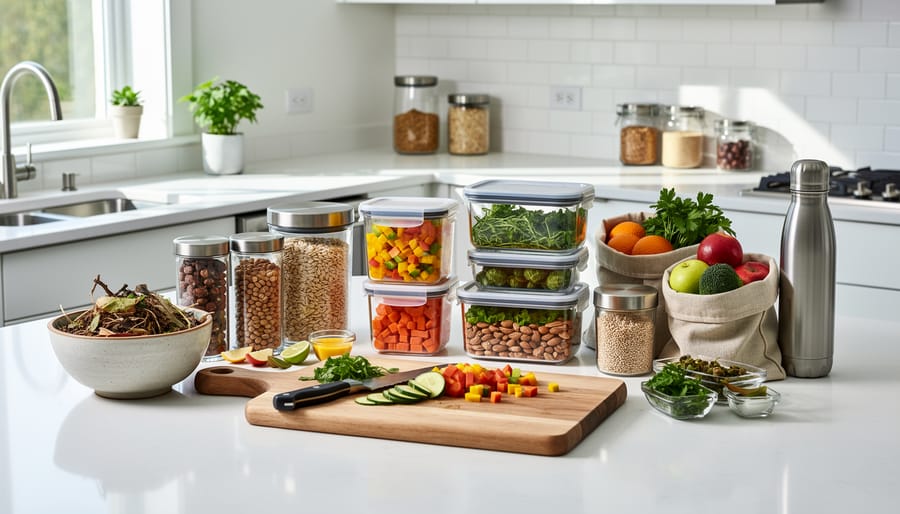
A sustainable kitchen isn’t a single product or piece of equipment, it’s a rhythm, a set of connected habits that flow from one decision to the next. The magic happens when you treat your kitchen as a system, where each stage feeds into the next, reducing waste and maximizing the value of every ingredient you bring home.
It starts before you even walk into a grocery store. Meal planning is the foundation that holds everything together. When you take fifteen minutes once a week to map out dinners, you buy only what you’ll actually use. That simple act prevents the cycle of impulse purchases rotting in the crisper drawer. You’re not just saving money, you’re keeping food out of landfills before it even enters your home.
Once you’re shopping with intention, the next step is storing food properly to extend its life. Herbs stay fresh longer wrapped in damp towels. Greens thrive in breathable produce bags. Grains and beans live happily in sealed glass jars that keep pests out and freshness in. These aren’t complicated tricks, they’re small adjustments that mean the difference between tossing wilted spinach on day three and using it on day ten.
The practical actions at each stage build on one another:
- Planning meals around what’s seasonal and what you already have
- Shopping with a list and reusable bags to avoid overbuying and packaging waste
- Storing produce at the right temperature and humidity to maximize freshness
- Cooking in batches and using energy-efficient methods like steaming or pressure cooking
- Transforming scraps into stock, compost, or creative second meals
When you’re ready to cook, efficiency becomes your ally. Batch cooking on Sunday means less energy spent heating the oven six times a week. Plant-forward eating naturally reduces resource use, since vegetables and grains require less water and land than meat-heavy meals. Using lids on pots, matching burner size to pan size, and thawing food in the fridge overnight instead of running hot water, these tiny tweaks add up.
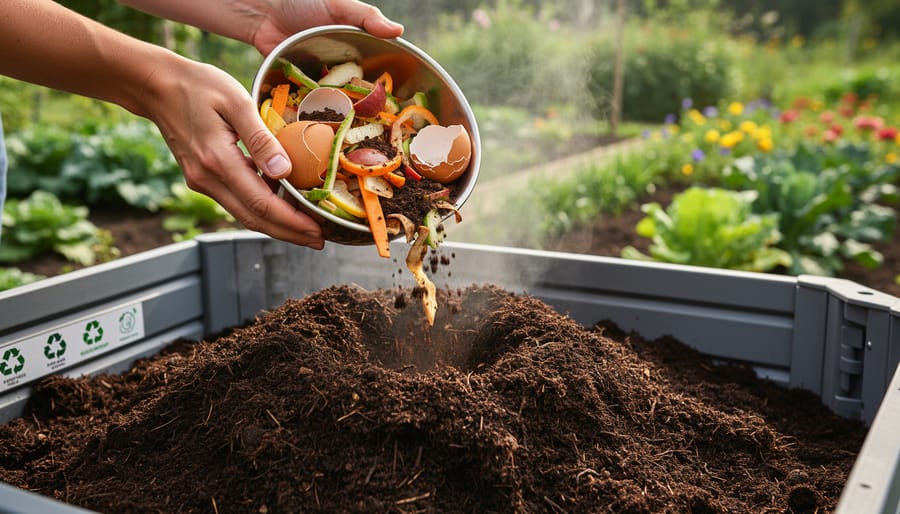
The loop closes with what happens to the scraps. Composting turns vegetable peels, coffee grounds, and eggshells into nutrient-rich soil instead of methane-producing landfill waste. Even without a backyard, countertop bins or community drop-off programs make composting accessible. The USDA offers detailed guidance to help you reduce food waste at home turning what once seemed like trash into a resource.
What makes this system work is that it’s forgiving. Miss a week of meal planning? Start fresh next Sunday. Forget to compost for a few days? Tomorrow’s a new chance. The goal isn’t perfection, it’s creating a flow that feels natural, where sustainable choices become the default rather than the exception.
Components of a Sustainable Kitchen System
Sustainable Ingredient Choices
The food you bring into your kitchen shapes your environmental impact more than almost any other choice. Shifting toward plant-forward meals, where vegetables, fruits, whole grains, and legumes take center stage, dramatically reduces your carbon footprint. Livestock production accounts for a substantial share of greenhouse gas emissions, so even swapping a few meat-based dinners each week for lentil stews or veggie stir-fries makes a measurable difference. Research shows it’s better to focus on what you eat rather than obsess over where every ingredient traveled from.
Choosing seasonal produce supports this effort while connecting you to natural growing cycles. Summer tomatoes and winter squash don’t just taste better in their prime, they require less artificial intervention to grow, lowering resource use. Shopping at farmers markets or joining a community-supported agriculture program puts money directly into local growers’ hands, strengthening your regional food system and often cutting transportation emissions. You’re not just buying carrots; you’re investing in the people who tend the soil near you, creating relationships that make sustainability feel less like sacrifice and more like community.
Resource-Smart Cooking and Storage
Resource efficiency in your kitchen doesn’t require a complete overhaul. Start with how you cook: using lids on pots cuts cooking time and energy use by up to 75%. Pressure cookers and slow cookers consume less electricity than conventional ovens while batch cooking means you heat your kitchen once for multiple meals.
Storage matters as much as preparation. Keep your refrigerator between 37°F and 40°F, each degree colder wastes 5% more energy. Store herbs in water like fresh flowers to extend their life by weeks. Glass containers let you see what you have, reducing forgotten food that spoils. Root vegetables stay fresh longer in cool, dark spaces rather than the fridge, saving both space and energy.
Water conservation builds in naturally when you rinse vegetables in a bowl instead of under running water, then use that water for houseplants. Scrape dishes rather than pre-rinsing before the dishwasher, which uses less water than handwashing for full loads.
The beauty here is simple: wasting fewer resources means spending less money while lightening your environmental footprint.
Waste Reduction and Circular Systems
Waste doesn’t have to be the endpoint in your kitchen, it’s often a design flaw you can fix. When food scraps hit the landfill, they decompose without oxygen and release methane, a greenhouse gas far more potent than carbon dioxide. That’s why landfilled food waste methane emissions are such a serious environmental concern. Composting those scraps instead, whether in a backyard bin, countertop system, or municipal program, closes the nutrient loop and returns valuable organic matter to soil.
Before anything becomes waste, get creative with leftovers. That wilted kale becomes pesto, stale bread turns into croutons, and vegetable peels simmer into rich broth. You’re not just saving money; you’re honoring the resources that went into growing that food.
Swap single-use items for reusables: glass storage containers instead of plastic wrap, cloth napkins instead of paper, beeswax wraps for covering bowls. Say no to plastic bags at checkout and carry produce loose or in mesh bags. Each small refusal shrinks the waste stream.
Zero-waste thinking isn’t about perfection. It’s recognizing that trash isn’t inevitable, it’s feedback showing where your system can improve.
Where Kitchen Sustainability Makes the Biggest Impact
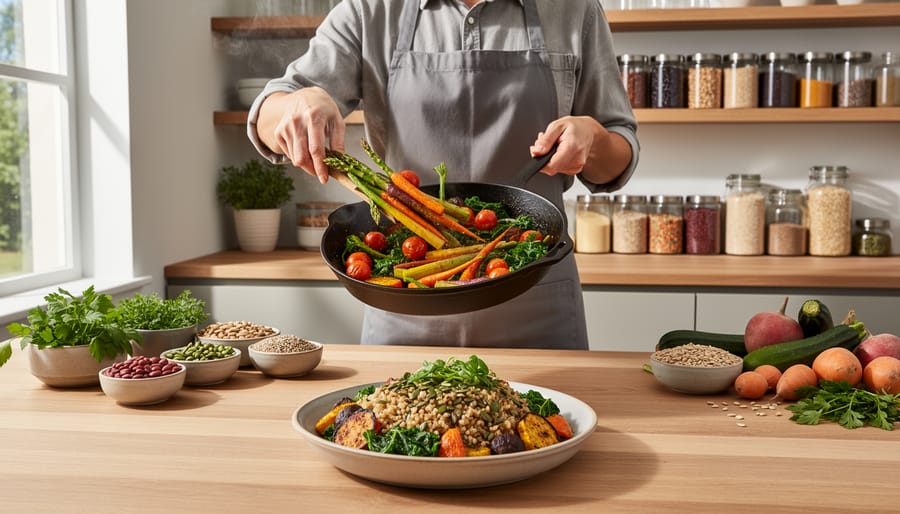
Kitchen sustainability shows up most powerfully in the moments you’re already spending in your kitchen, you’re just making them count differently. Meal prep transforms when you plan around what’s seasonal and batch-cook grains or beans for the week ahead, cutting down on packaging, energy use, and last-minute takeout. A Sunday afternoon spent roasting vegetables and portioning meals means fewer frantic weeknights reaching for convenience foods wrapped in plastic.
Family cooking becomes a teaching lab. When you involve kids in rinsing out jars for reuse or sorting scraps for compost, you’re building habits that’ll stick. A parent choosing imperfect produce at the store and explaining why it tastes just as good models values without lecturing. Understanding how sustainable diets actually lower environmental impact makes these choices feel purposeful rather than restrictive.
Entertaining sustainably doesn’t mean serving guests a lecture with dinner. It looks like cloth napkins instead of paper, a beautiful salad built from farmers market finds, tap water in a nice pitcher rather than bottled. You’re creating an experience people remember, not because you announced your eco-credentials, but because the food tasted fresh and nothing felt wasteful.
Even small households see impact. A solo cook shopping with reusable produce bags and storing leftovers in glass containers sidesteps tons of single-use waste annually. Choosing brands with honest environmental claims helps you avoid greenwashing while supporting genuinely responsible companies.
The common thread across all these scenarios: sustainability gets embedded in routines you already have. You’re not adding complexity, you’re making existing habits work harder for the planet. A busy professional, a multigenerational household, or a college student in a tiny kitchen can each find their entry point. Start where your life actually happens, and the impact compounds from there.
Real Stories from Sustainable Kitchens
When Maya, a working parent of three in Austin, started tracking what she threw away each week, she was shocked to discover her family was tossing nearly $200 worth of food monthly. “I thought we were being careful, but vegetables were wilting in the crisper, and we’d forget about leftovers in the back of the fridge,” she shares. She implemented a simple Sunday meal-planning session with her kids and reorganized her refrigerator so older items sat front and center. Within three months, her family had reduced food waste by 60%. “The best part? My kids now understand where food comes from and why wasting it matters. They’ve become my accountability partners.”
Across the country, college student Jamal discovered plant-based eating didn’t require a trust fund or specialty stores. Living in a food desert in Detroit with limited grocery access, he started with dried beans, lentils, and frozen vegetables from a corner store, staples that cost him less than $30 weekly. “I learned to batch-cook on Sundays. One pot of lentil curry feeds me for days, costs almost nothing, and uses way less energy than cooking every night,” he explains. His roommates noticed his lower grocery bills and better energy levels, and three of them now share cooking duties using his simple rotation of affordable plant-based recipes.
In Portland, retired teacher Linda turned her frustration with overflowing trash into neighborhood action. She started small, composting her own kitchen scraps in a backyard bin. When neighbors asked about her thriving garden, she shared her secret: nutrient-rich compost. That conversation sparked a community composting program now serving forty households. “People think they need fancy systems or lots of space, but we proved you can start with a simple bin and a willingness to learn together,” Linda says. Her initiative has diverted over two tons of organic waste from landfills in just eighteen months.
Common Questions About Kitchen Sustainability
Is eating sustainably more expensive?
It doesn’t have to be. While some organic or specialty items cost more, sustainable practices like meal planning, buying seasonal produce, cooking from scratch, and reducing waste often save money. Shifting toward more plant-based proteins typically lowers your grocery bill compared to meat-heavy diets.
What if I don’t have access to farmers markets or specialty stores?
You can still make sustainable choices at conventional supermarkets. Focus on buying what’s in season, choosing items with minimal packaging, selecting store-brand organics when available, and paying attention to eco labels that indicate genuine environmental standards rather than marketing spin.
Can I still use convenience foods and be sustainable?
Absolutely. Perfect shouldn’t be the enemy of good. Choose convenience items with recyclable packaging, buy frozen vegetables to prevent spoilage, or opt for pre-cut produce if it means you’ll actually cook instead of ordering takeout. Balance is what makes sustainability stick long-term.
How do I get my family on board with kitchen changes?
Start with changes that improve their experience, not just the planet, tastier meals using fresh ingredients, fun composting projects with kids, or trying new recipes together. Involve everyone in decisions rather than imposing rules, and celebrate small wins to build momentum.
What’s the single most impactful change I can make?
Reducing food waste delivers the biggest bang for your effort. When you prevent food from ending up in landfills, you save the resources that grew it, the energy that transported it, and the money you spent on it, while cutting methane emissions from decomposition.
I’m already overwhelmed, do I need to change everything at once?
Not even close. Sustainable kitchen practices work best when you integrate them gradually. Pick one shift that feels manageable this week, whether that’s starting a compost bin, swapping to reusable produce bags, or planning Monday’s meals on Sunday. Build from there as each habit becomes second nature.
These questions reflect what most people genuinely wonder when they first explore kitchen sustainability, and the honest answers acknowledge that context matters. Your living situation, budget, time availability, and household dynamics all shape what’s realistic for you. Someone in a rural area with a big garden faces different opportunities and constraints than an apartment dweller in a city center. A single person cooking for one has different challenges than someone feeding a family of five with varying preferences.
The thread connecting all these scenarios is the same: sustainability isn’t a rigid checklist but a direction you move toward. Some weeks you’ll nail the meal prep and waste nothing. Other weeks you’ll rely on frozen dinners because life got chaotic, and that’s fine. What matters is that over time, your default choices shift toward options that lighten your environmental footprint while fitting into the rhythm of your actual life, not an idealized version of it.
Kitchen sustainability isn’t about achieving perfection overnight. It’s about recognizing that every choice you make, from choosing a reusable bag to composting your coffee grounds, contributes to a larger movement toward environmental health. The beauty lies in starting exactly where you are, with what you have.
This week, choose one practice that resonates with you. Maybe it’s planning your meals on Sunday to prevent food waste, switching to reusable produce bags, or simply eating one more plant-based meal. That single shift creates momentum. As it becomes habit, you’ll naturally spot your next opportunity to align your kitchen with your values.
Your sustainable kitchen is part of something bigger. When you reduce waste, support local farmers, or teach a child where food comes from, you’re voting for a food system that values people and planet over convenience alone. These everyday acts weave together into collective change, building the conscious, transparent, and inclusive future we all deserve.
Start small. Stay curious. Your kitchen is where transformation begins, one mindful meal at a time.